Startups7 min read
Side projects developers can launch in 2027: small tools for people you can actually reach
Six side project ideas for developers in 2027, built for buyers you can walk up to: shops, tuition centres, clinics, print shops and trusts. With the free-tier maths on Cloudflare Workers and D1, and what we learned shipping Redlyn and Fatura.

Quick summary
- Build for a group you can reach in person or on WhatsApp this week: one trade, one town, one language. That beats a clever idea with no first users.
- Six ideas below, each one taken from a real problem we saw while building our own products and client sites.
- A small tool can run on Cloudflare's free plan: 100,000 Worker requests a day, and in D1, 5 million rows read and 100,000 rows written a day.
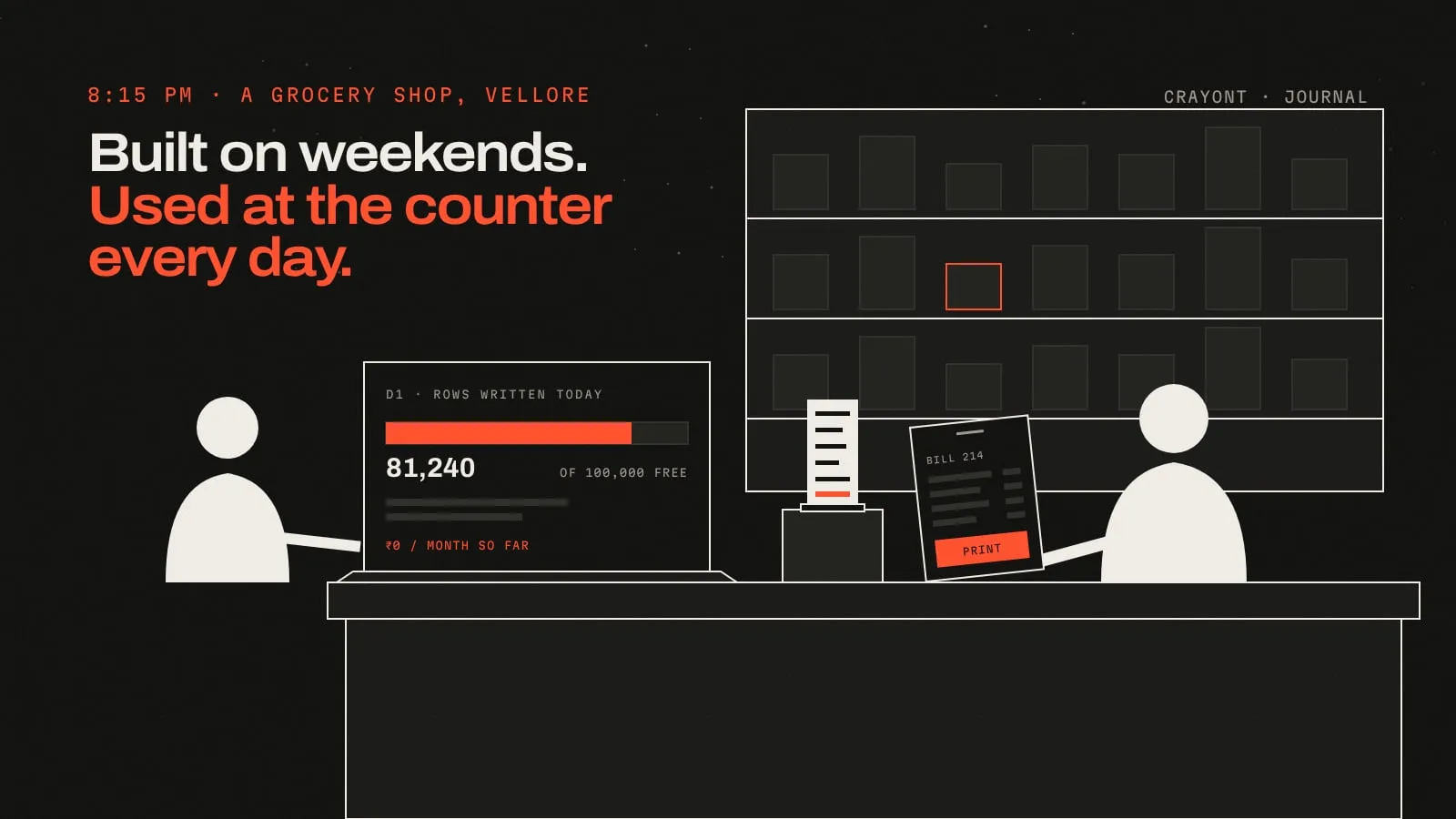
- Do the row maths before launch. Fifty shops billing 300 times a day can use 90% of the free write limit.
- Skip it if you can't name ten people who will use it, or if it needs heavy work on the server for every request.
The side project that works in 2027 is a small tool for people you can walk up to. Not a clever app for “everyone”, but billing for the grocery shops on your street, fee reminders for the tuition centres you know, proof approvals for the print shop your family uses.
You can reach those people this week, they already have the problem every day, and the tool can run on a free hosting plan until they’re paying you.
Most side project lists ranking for this search today are either portfolio exercises (a weather app, a to-do list, a clone) or “SaaS that makes money” lists with no buyer in sight. Below are six ideas with a named buyer, the first version to build, and the free-tier maths. They come from what we saw building our own two products and sites for small businesses in Tamil Nadu. Every hosting limit below links to Cloudflare’s own docs.
What we learned shipping two of our own
We build client sites for a living, and we also ship our own small products. Two are live: Redlyn, visual website feedback for agencies, and Fatura, a billing app for grocery shops.
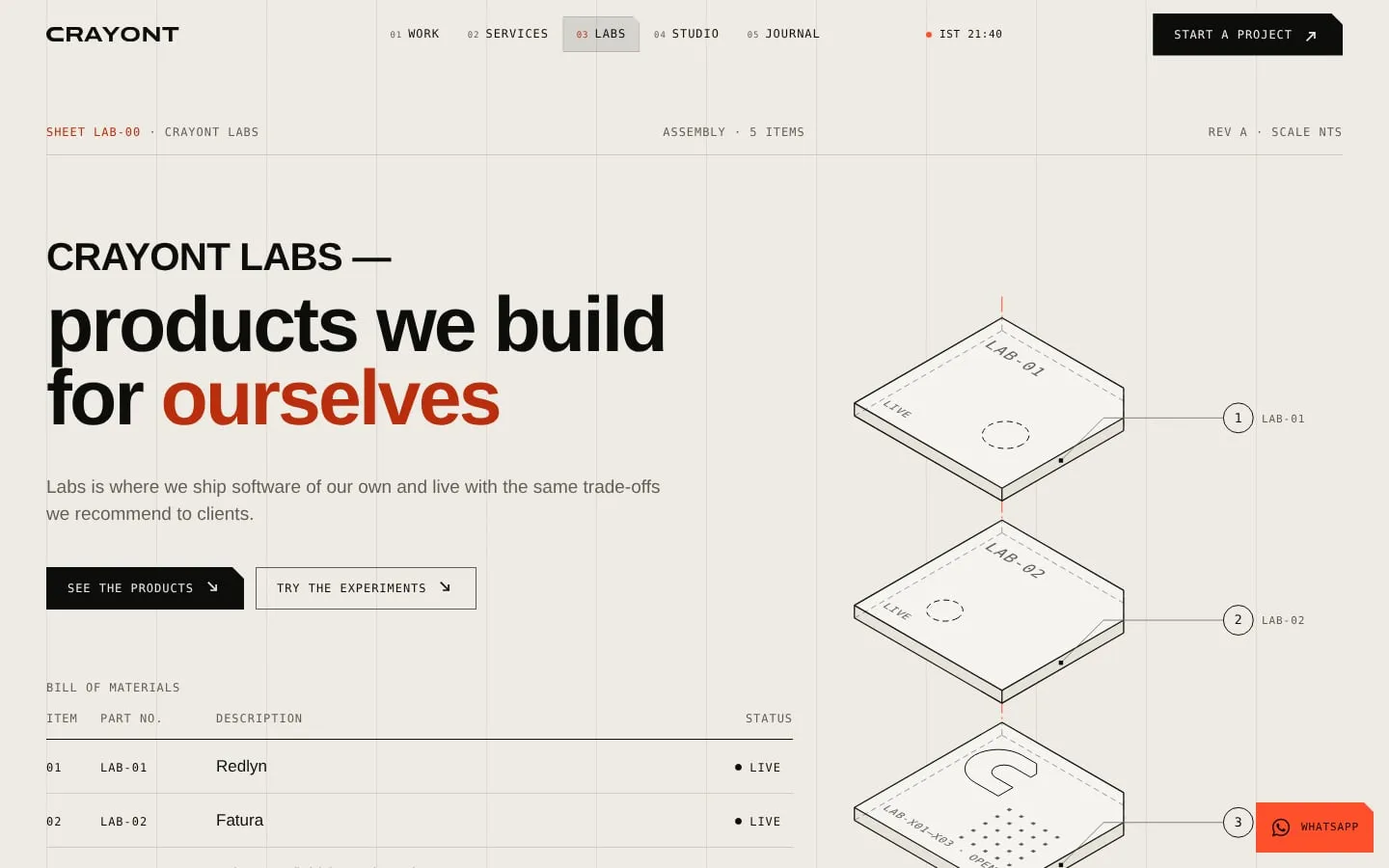
Three things from those two launches shaped this list:
- The first user was us, or someone next door. Redlyn started because client feedback on our own sites arrived as WhatsApp screenshots with arrows. Fatura is for shops that bill in Tamil and English, the kind of shop you find on any street in Vellore.
- The first version was small and shipped fast. Fatura’s first release (Tamil search and bills, printing to 80 mm Bluetooth printers, PDF bills and the Android app) went out on 28 September 2026. Two days later we shipped a second release with a faster start and a weekly sales chart. The changelogs are public on the Fatura and Redlyn pages.
- Boring hosting was the right call. Both run on Cloudflare: Fatura on Workers and D1, Redlyn on Pages Functions with D1. No server to patch at 2 AM.
27 Sep 2026
Redlyn, first release
A team link and a client link on one live page.
28 Sep 2026
Fatura, first release
Tamil bills on 80 mm printers, plus the Android app.
30 Sep 2026
Second releases
Voice notes in Redlyn; a faster start in Fatura.
6 Oct 2026
Redlyn, third release
Shortcuts, instant pins and editable comments.
Six side project ideas for 2027
Each idea names who uses it, the smallest first version, and how to get your first ten users. None of them needs a big team or money up front.
1. Billing and stock for one trade, in the local language
Who uses it. Small shops in one trade (grocery, hardware, medical, stationery) that bill in Tamil, Telugu, Kannada or Hindi.
First version. Search items in two languages, make a bill, print it on a cheap Bluetooth receipt printer, keep the day’s total. That’s what Fatura shipped first, and it was enough.
First ten users. Walk into ten shops near you with the app on your phone. Offer to set it up for free.
2. Proof approvals for print shops
Who uses it. Printing presses that send design proofs for visiting cards, wedding cards and banners, and then chase the customer for “OK, print it”.
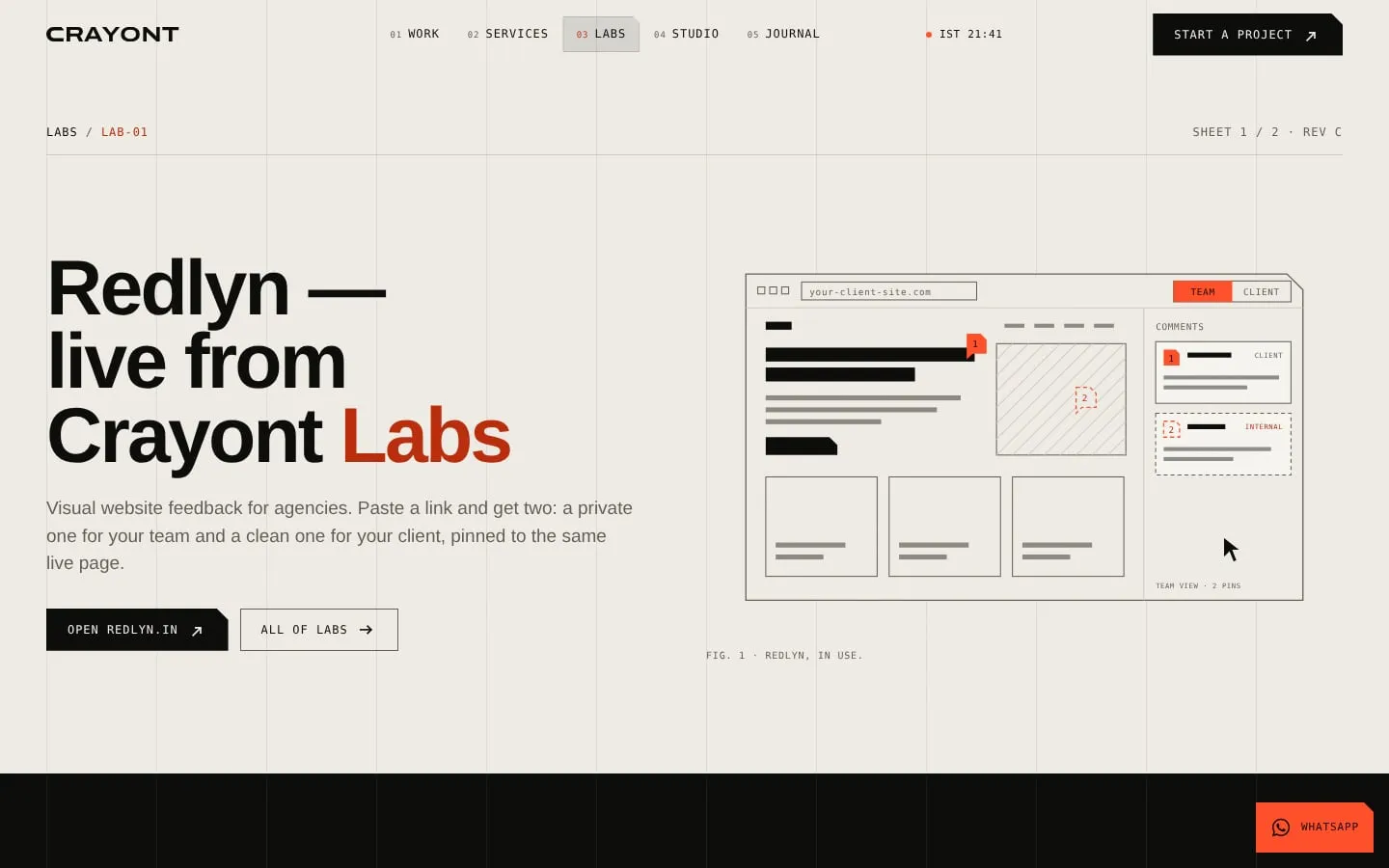
First version. Upload a proof, share a link, let the customer tap Approve or leave a comment on the exact spot. It’s Redlyn’s idea, aimed at a different trade.
First ten users. Print shops are in every town, and the owner is usually at the counter. Show them a proof link on your phone.
3. Fee reminders and attendance for tuition centres
Who uses it. Tuition and coaching centres with 30 to 300 students, tracking fees in a notebook.
First version. A list of students, who has paid this month, and a button that opens WhatsApp with a ready-written reminder. Sending through WhatsApp’s own app keeps your cost at zero until you need automation.
First ten users. Every parent knows three tuition centres. Start there.
4. Call-back requests for clinics and counsellors
Who uses it. Clinics, counsellors and lawyers whose clients don’t want to book in public.
First version. A short form (what you need, preferred time, language) that sends the request to the practitioner and confirms to the client. We built this pattern into a family counselling centre’s site in three languages, because a public calendar felt wrong for that kind of help.
5. Price lists and quotes for small manufacturers
Who uses it. Small factories and workshops that send prices as PDFs over WhatsApp and lose track of which version a customer saw.
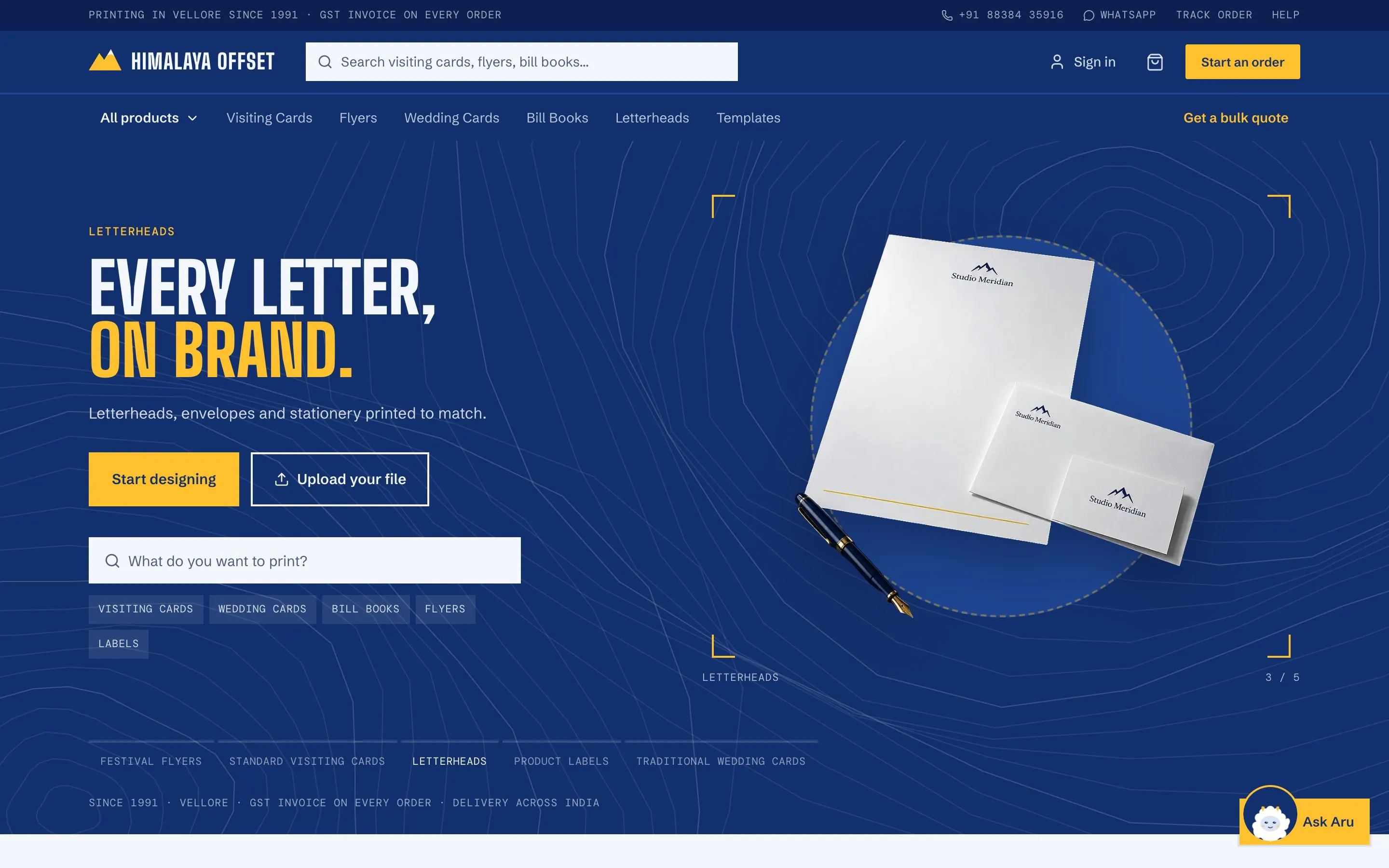
First version. One page per product with bulk prices and GST shown up front, and a “get a quote” button that creates a numbered quote. The Himalaya Offset shop shows bulk prices and the total before checkout for the same reason: customers stop asking.
First ten users. Industrial estates are dense. Ten units are often on one road.
6. Itemised giving pages for trusts and madrasas
Who uses it. Trusts, schools and religious institutions raising money for a building or for students.
First version. A page that lists what is needed (a bag of cement, a sack of rice, bricks), lets donors pick items at a set price and pay, and sends a receipt that lists them. That’s the core of the Madrasa Rahmaniya site we built.
First ten users. Ask the institutions you or your family already give to.
The free-tier maths, before you launch
All six ideas fit a simple stack: a static front end, a few API routes and a small SQL database. On Cloudflare’s Workers Free plan you get:
| What | Free plan limit |
|---|---|
| Worker requests | 100,000 a day, reset at midnight UTC |
| CPU time per request | 10 ms |
| D1 rows read | 5 million a day |
| D1 rows written | 100,000 a day |
| D1 storage | 5 GB in total |
Static files are free and don’t count as requests, according to Cloudflare’s pricing page. Since 1 September 2026, D1 queries fail on the free plan once you pass the daily row limits, until the reset. So you need to know your numbers.
Here’s a worked example with made-up numbers for idea 1. Say 50 shops each make 300 bills a day. If each bill writes one row for the bill and one row per line, and a bill has 5 lines on average, that’s 6 rows per bill:
50 shops × 300 bills × 6 rows = 90,000 rows written a dayThat’s 90% of the free write limit, and it doesn’t include stock updates. Add one stock row per line and it becomes 165,000, which is over. Cloudflare’s docs also note that an index adds a write whenever an indexed column changes. Three ways to stay under the limit:
- Store the lines as one JSON column on the bill row: 1 write per bill instead of 6.
- Update stock once an hour in one batch instead of on every sale.
- Move to the Workers Paid plan when the shops are paying you. It starts at $5 a month and includes 50 million D1 writes a month.
Do
Count rows written per action before launch
D1 returns rows_read and rows_written for every query, so measure it in testing.
Don't
Find the limit when shops can't bill at 8 PM
Free-plan queries fail until midnight UTC, which is 5:30 AM in India.
When not to build it
A side project eats your evenings for months. Don’t start it if any of these is true:
- You can’t name ten people who’d use it. Not “shop owners”, but ten actual shops.
- Every request needs heavy server work, such as resizing images, making PDFs on the server or running AI on each request. 10 ms of CPU on the free plan won’t cover it. Do that work in the browser or on the phone, or budget for the paid plan.
- It handles money or medical records and you can’t get proper advice. Use a payment provider’s hosted checkout and keep sensitive data out entirely.
- Your job contract says no. Many employment contracts have a clause about outside work. Read yours before you launch something with your name on it.
A two-week plan
Week one is for the smallest working version on your own phone. Week two is for putting it in front of real users.
Two weeks, one idea
- Day 1: write down ten named users and the one daily job you'll save them.
- Days 2 to 5: build that one job only. No login screen if a link will do.
- Day 6: count rows read and written per action and check them against the free limits.
- Days 7 to 10: set it up for the ten users in person. Watch them use it.
- Days 11 to 14: fix what they asked for and ship it, like our second releases.
If the side project starts to grow
When users pay and ask for more, the side project needs proper logins, roles, payments and a dashboard. That’s the point where a lot of people bring in help. With us, a web app with logins, a dashboard and integrations starts at ₹2,50,000, and a landing page to test the next idea starts at ₹12,999. See our work for what we’ve built for small businesses, or tell us about your idea.
Questions people ask
- What side project should a developer build in 2027?
- A small tool for one group of people you can reach directly, such as grocery shops in your town, tuition centres, clinics or print shops. Pick a job they do every day by hand, like billing, fee reminders or proof approvals, and build the smallest version that saves them time.
- Can a side project run for free?
- Often, yes, at the start. On Cloudflare's Workers Free plan you get 100,000 requests a day and 10 ms of CPU time per request, and D1 gives 5 million rows read, 100,000 rows written and 5 GB of storage. The paid plan starts at $5 a month when you outgrow that.
- How do I find the first users for a side project?
- Go to them. Visit five shops, call five tuition centres or message five agencies you already know, show a working screen on your phone and ask them to use it for a week. Ten real users who open it every day tell you more than a launch post.
- Should I charge for my side project?
- Give the first version free to a small group, then charge once they rely on it. Our own tool Redlyn is free for one website, and paid plans start at ₹499 a month.
- Can Crayont build my side project or startup idea?
- Yes. We're a two-founder design-engineering studio in Vellore, India. A landing page to test an idea starts at ₹12,999 and a web app with logins and a dashboard starts at ₹2,50,000, fixed after a written spec.
Keep reading
All notes →- Startup ideas to work on in 2027: six openings created by real deadlines and platform changesSix startup ideas for 2027, each tied to a rule or platform change you can check yourself: who pays, why now, what the first version needs, what it costs to build in India, and how to test it in two weeks.
- AI tool ideas for small businesses in 2027: five small tools you can build, and what they cost to runFive small AI tools to build for shops, clinics and tuition centres in 2027: voice notes to bills, enquiry replies in Tamil and English, price-list search, enquiry sorting and read-aloud updates. With the model for each and the running cost worked out from Cloudflare's published prices.
- How to validate a startup idea with a landing page in 2027, from IndiaA two-week plan to test a startup idea with one landing page before you build: what goes on the page, how to take real deposits with UPI, how to get the first 200 visitors, what to count, and when to stop.